University of St. Thomas Athletics
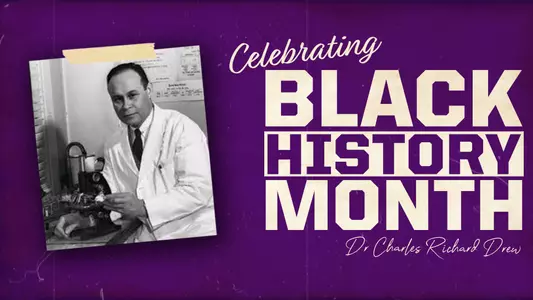
Celebrating Black History Month: Dr. Charles Richard Drew
2/25/2021 5:00:00 PM | Athletics
As we celebrate Black History Month throughout the month of February, we not only look back at members of the St. Thomas community who inspire us, but also those outside of St. Thomas who inspire our entrepreneurial and innovative spirit. This week, we are inspired by Dr. Charles Richard Drew, whose impact changed the game for the medical field.
Dr. Charles Richard Drew began his journey to revolutionize the medical industry without knowing what he was ultimately going to pursue. Instead, Drew enrolled in classes at Amherst College after being recruited and offered a scholarship to be a member of the football and track and field teams.
One of just 13 black students in a student body of 600, Drew's path ultimately led to medicine following his graduation from Amherst in 1926. After working as a biology instructor and coach at Morgan College (now Morgan State University) for two years, Drew enrolled in medical school at McGill University in Montreal, Canada.
Drew earned many accolades while at McGill, ultimately graduating second among a class of 137 peers. Under professor John Beattie during his residency at Montreal Hospital, Drew found his calling in transfusion medicine. As he began his doctorate work, instead of following the traditional path of residents to gain experience, Drew was assigned to work under John Scudder, who was working with an experimental blood bank. This prevented Drew from being afforded typical experience with patients, privileges that were given to his white peers.
This turned out to be the basis for Drew's impact. He went on to develop an innovative method of preserving blood plasma, which could be stored for a much longer period of time than whole blood. Upon this discovery, Drew soon became the first black student to earn a doctorate degree from Columbia. His thesis: "Banked Blood."
As World War II coursed through Europe, Drew's findings garnered attention and in 1940, he was selected to lead a special medical effort titled "Blood for Britain." Drew collected and processed blood plasma from New York hospitals and shipped it to Europe to treat those injured.
Soon Drew spearheaded another blood bank effort, this time on U.S. soil for the American Red Cross that was used for U.S. military personnel. Shortly thereafter, Drew spent nine years as the Head of the Department of Surgery at Howard University and the Chief of Surgery at Freedmen's Hospital. His mission became to train black surgeons and continue to nurture a tradition of excellence. In addition, he campaigned against the exclusion of black physicians from medical societies, medical specialty organizations, and the American Medical Association.
Now affectionately called the "Father of the Blood Bank," Drew's innovative work revolutionized treatments that are available to this day.
Dr. Charles Richard Drew began his journey to revolutionize the medical industry without knowing what he was ultimately going to pursue. Instead, Drew enrolled in classes at Amherst College after being recruited and offered a scholarship to be a member of the football and track and field teams.
One of just 13 black students in a student body of 600, Drew's path ultimately led to medicine following his graduation from Amherst in 1926. After working as a biology instructor and coach at Morgan College (now Morgan State University) for two years, Drew enrolled in medical school at McGill University in Montreal, Canada.
Drew earned many accolades while at McGill, ultimately graduating second among a class of 137 peers. Under professor John Beattie during his residency at Montreal Hospital, Drew found his calling in transfusion medicine. As he began his doctorate work, instead of following the traditional path of residents to gain experience, Drew was assigned to work under John Scudder, who was working with an experimental blood bank. This prevented Drew from being afforded typical experience with patients, privileges that were given to his white peers.
This turned out to be the basis for Drew's impact. He went on to develop an innovative method of preserving blood plasma, which could be stored for a much longer period of time than whole blood. Upon this discovery, Drew soon became the first black student to earn a doctorate degree from Columbia. His thesis: "Banked Blood."
As World War II coursed through Europe, Drew's findings garnered attention and in 1940, he was selected to lead a special medical effort titled "Blood for Britain." Drew collected and processed blood plasma from New York hospitals and shipped it to Europe to treat those injured.
Soon Drew spearheaded another blood bank effort, this time on U.S. soil for the American Red Cross that was used for U.S. military personnel. Shortly thereafter, Drew spent nine years as the Head of the Department of Surgery at Howard University and the Chief of Surgery at Freedmen's Hospital. His mission became to train black surgeons and continue to nurture a tradition of excellence. In addition, he campaigned against the exclusion of black physicians from medical societies, medical specialty organizations, and the American Medical Association.
Now affectionately called the "Father of the Blood Bank," Drew's innovative work revolutionized treatments that are available to this day.


Press Conference: Tommie Women's Basketball Head Coach Mandy Pearson
Thursday, March 26
Homegrown Tommies: Chase Cheslock
Thursday, March 19
Postgame: Tommie Women's Basketball, Summit League Semifinals v NDSU
Sunday, March 08
Postgame: Tommie Women's Basketball, Summit League Quarterfinals v ORU
Friday, March 06